Acne & Texture · September 15, 2026 · 6 min read
Blackheads vs. Sebaceous Filaments: What Those Dots on Your Nose Really Are
Lean into a magnifying mirror and you will probably find them: tiny gray or tan dots across your nose, maybe on your chin and cheeks too. Most people call them blackheads and go to war with pore strips and fingernails. Often, though, what you are looking at is something completely normal called a sebaceous filament.
Telling the two apart matters, because the right approach for each is different. One is a type of acne you can clear. The other is part of how healthy skin works, and the goal is simply to make it less noticeable.
What a sebaceous filament is
Your skin has oil glands (sebaceous glands) attached to hair follicles. A sebaceous filament is a thin, thread-like column of oil and skin cells that lines the pore and guides oil up to the surface. Cleveland Clinic describes them as a normal, healthy part of your skin, not acne.
They are most visible where oil glands are biggest and most active: the nose, chin, forehead and the inner cheeks. If you produce more oil, or your pores are naturally larger, they show up more. They also refill. Squeeze one out and it typically returns within a few weeks, because that space is supposed to have a filament in it.
What a blackhead is
A blackhead is a clogged pore, technically an open comedone. Oil and dead skin cells build up and form a plug. Because the pore is open to the air, the top of that plug darkens. The AAD points out that the dark color is not dirt, which is why scrubbing harder does not fix it.
Blackheads are a form of acne. They tend to be fewer and more scattered, look distinctly darker, and can feel slightly raised or bumpy. Left alone, some can become inflamed.
How to tell them apart
You do not need a professional to tell you which one you have in most cases. A few clues help:
- Color: filaments look light gray, tan or yellowish; blackheads look truly dark, close to black.
- Pattern: filaments are small, evenly spaced and cover an area, like a grid; blackheads are fewer and random.
- Texture: filaments sit flat with the skin; blackheads can feel like a tiny raised bump.
- What comes out when pressed: Cleveland Clinic notes filaments release a pale, waxy thread, while blackheads release a darker, firmer plug.
- Return time: filaments come back fast, often within weeks; a properly cleared blackhead does not necessarily return in the same spot.
Why squeezing and pore strips backfire
Squeezing at home pushes on the pore walls and can stretch them, irritate the skin and introduce bacteria. Cleveland Clinic cautions that trying to remove filaments can dry out your skin and let in bacteria that can lead to breakouts. Because filaments refill anyway, you get the irritation without a lasting result.
Pore strips feel satisfying, but they mostly lift the very top of what is there and can be rough on thin or sensitive skin. If you love them, use them rarely, never on irritated or sunburned skin, and never alongside a strong retinoid or fresh peel.
How to minimize the look of sebaceous filaments
You cannot (and should not) get rid of sebaceous filaments permanently. You can keep them looking smaller and less noticeable by keeping oil and dead skin moving out of the pore.
- Cleanse gently twice a day. A salicylic acid cleanser a few times a week can help, since salicylic acid works inside the oily pore.
- Use a retinoid at night. The AAD recommends retinoids for unclogging pores, and adapalene is available without a prescription.
- Try an oil-based cleanser or cleansing balm as a first step at night. It loosens sunscreen and makeup and can soften what sits at the top of the pore.
- Moisturize, even if you are oily. Over-dried skin often looks rougher and can produce more oil in response.
- Wear daily sunscreen. Sun damage can make pores look larger over time.
How to clear true blackheads
For actual blackheads, the AAD points to a retinoid as the main treatment, often paired with a salicylic acid or benzoyl peroxide wash. Give it six to eight weeks. If the blackheads persist, or you have a lot of them, a professional can help.
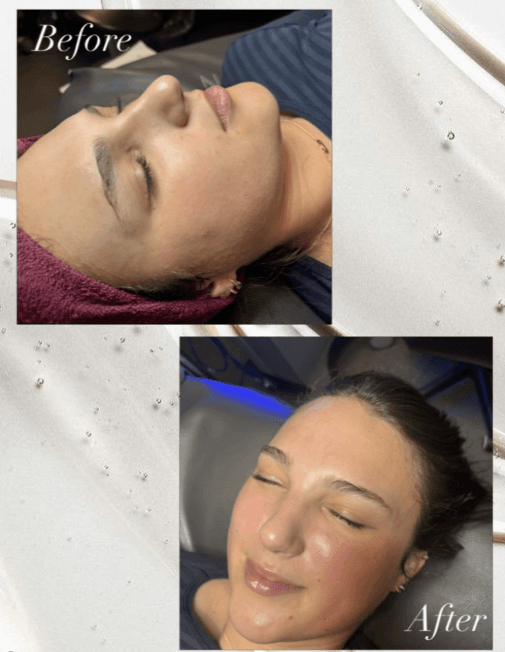
Professional extraction is very different from squeezing in the bathroom mirror. Skin is prepped and softened first, pressure is controlled, and the area is calmed afterward. At BELA Aesthetics, extractions are part of our Signature BELA Glow Facial and Acne Clearing Facial, and we will only extract what is ready to come out. We will also tell you honestly when a dot is a filament that is better left alone.
Light chemical peels can also help over time by loosening the buildup that forms blackheads and smoothing overall texture.
A simple weekly routine for a less noticeable nose
If you want a starting point, this is an easy, low-irritation routine for oily or congested skin. Adjust it if your skin feels tight or stings, and give it at least six weeks before deciding whether it works.
- Morning: gentle cleanser, lightweight non-comedogenic moisturizer, SPF 30 or higher.
- Evening, most nights: oil cleanser or balm, gentle cleanser, adapalene on dry skin, moisturizer.
- Two or three mornings a week: swap in a salicylic acid cleanser and let it sit for about a minute.
- Every four to six weeks: a professional facial with extractions if blackheads keep building up.
A realistic goal
Healthy skin has pores, and pores on the nose have filaments in them. A good routine will make them less obvious in photos and in the mirror, but no product or facial will make your nose look like a filter. Focusing on comfortable, consistent care will get you further than chasing a perfectly blank nose.
Key takeaways
- Sebaceous filaments are normal oil channels; blackheads are clogged pores and a form of acne.
- Filaments look light gray and evenly spaced; blackheads are darker, fewer and sometimes raised.
- Squeezing filaments stretches and irritates pores, and they refill anyway.
- Salicylic acid, a retinoid, gentle cleansing and sunscreen help minimize both.
- Professional extraction is the safe way to clear stubborn blackheads.
When to see a dermatologist: Blackheads and filaments are not medical emergencies, but see a board-certified dermatologist if you also have inflamed pimples, deep or painful bumps, acne that leaves scars, or blackheads that do not improve after a few months of consistent care. Cleveland Clinic also recommends seeing a dermatologist when filaments appear alongside more severe acne. A dermatologist can prescribe stronger retinoids and other treatments.
Not sure what your skin needs?
Take our 60-second skin quiz for a personalized treatment match, or book a visit at our Garden City studio.
Questions
Can sebaceous filaments be removed permanently?+
No. They are a normal part of skin and refill on their own. The goal is to keep them less visible with gentle exfoliation, a retinoid, sunscreen and consistent cleansing.
Do pore strips work?+
They lift the very top of what is in the pore, so results are short-lived, and they can irritate sensitive skin. Use them sparingly, if at all.
Should I get extractions in a facial?+
Professional extractions are a safe way to clear true blackheads when the skin is prepped and the pressure is controlled. A good esthetician will leave normal filaments alone instead of over-working the skin.
Sources
- Cleveland Clinic: Sebaceous filaments
- American Academy of Dermatology: How to treat different types of acne
- Cleveland Clinic Health Essentials: How to get rid of blackheads
Educational content from a licensed esthetician, not medical advice.