Sun & Climate · November 11, 2026 · 6 min read
Winter Inversion Skin Care: Protecting Your Skin When Boise's Air Gets Stuck
Anyone who's spent a winter in the Treasure Valley knows the gray lid that settles over the valley some years. The National Weather Service notes that strong inversion events here may last several days or even weeks when the weather pattern stagnates, often bringing fog and low clouds. Idaho's Department of Environmental Quality (DEQ) says these wintertime inversions trap cold air and pollutants near the ground, and that valley monitors have recorded fine particle (PM2.5) levels above federal standards during these events.
Air quality is first a lung and heart health issue, and the most important steps are the ones public health agencies recommend. But skin is the organ that meets the air directly, and many people notice their skin feels duller, drier or more reactive in inversion season. Here's what the research actually supports, and a calm, practical routine.
What we know about air pollution and skin
A 2020 systematic review in Particle and Fibre Toxicology looked at studies on airborne particulate matter and skin, from population studies to lab experiments. The authors concluded that particulate matter was shown to cause skin barrier dysfunction and to trigger oxidative stress and inflammation. Population studies have associated higher pollution exposure with signs of skin aging such as pigment spots and coarse wrinkles, and with atopic eczema.
It's worth being honest about the limits. Much of the mechanism research comes from cell and animal studies, and the human studies show associations, not proof that pollution caused a specific change. Inversion days aren't going to age your skin overnight. But the evidence is reasonable enough that supporting your skin barrier during long stretches of poor air is a sensible, low-risk habit.
Inversion season is also dry-skin season
Inversions come with cold air outside and furnaces running inside, both of which pull moisture from skin. The Cleveland Clinic notes that dry skin is often worse in winter, especially in low-humidity climates. Because a healthy barrier is your skin's main defense against irritants, keeping skin moisturized does double duty in inversion season.
This is also the time of year to simplify. If your skin is stinging or red, pause strong acids, scrubs and retinoids for a week or so and focus on a gentle cleanser, a rich fragrance-free cream and sunscreen. The AAD recommends creams or ointments over lotions for dry skin, and short, warm showers rather than long, hot ones. Once your skin feels comfortable again, bring your actives back one at a time.
An evening routine: cleanse gently, every night
At the end of the day, remove sunscreen, makeup and whatever has settled on your skin. The key word is gently. Scrubbing or using harsh foaming cleansers damages the barrier you're trying to protect.
- If you wear sunscreen or makeup, start with a cleansing balm or oil, then follow with a mild, fragrance-free cleanser.
- Use lukewarm water; the American Academy of Dermatology (AAD) recommends warm, not hot.
- Pat dry and moisturize right away, while skin is still slightly damp.
- Skip nightly scrubs. If you exfoliate, keep it to once or twice a week.
A morning routine: antioxidant, moisturizer, sunscreen
Many skincare products marketed for pollution rely on antioxidants. The 2020 review noted that most protective cosmetic ingredients are antioxidant-based and aim to counter oxidative stress, though how well they work on skin is still being studied. A vitamin C or other antioxidant serum is a reasonable, low-risk addition if your skin tolerates it. Follow it with a moisturizer that supports your barrier, with ingredients like ceramides, glycerin or dimethicone.
Finish with sunscreen. The World Health Organization notes that UV can be high even with cloud cover, and thin clouds can let a lot through. On thick fog days UV is generally lower, but inversion layers often sit below sunny mountains, and if you head up to ski, fresh snow can reflect up to 80 percent of UV, according to the WHO.
Make your home a recovery zone
On poor-air days, many people spend more time indoors with the heat cranked, which dries the air even more. A bedroom humidifier helps; the EPA recommends indoor humidity between 30 and 50 percent. Keep the humidifier clean so it doesn't grow mold.
Residential wood heating is one of the PM2.5 sources Idaho DEQ has targeted in the Treasure Valley, and DEQ and local governments can issue burn bans during poor-air periods. Skipping the fireplace on bad-air days is good for your household and your neighbors, and it keeps indoor air from getting smokier.
Check the air before you plan your day
Idaho DEQ publishes daily air quality forecasts and advisories, and AirNow.gov shows the current Air Quality Index for your area. On days with elevated readings, follow public health guidance, especially if you're sensitive or have asthma, heart or lung conditions. From a skin perspective, those are good days for an indoor workout and a little extra moisturizer.
If you do exercise outside during inversion season, rinse your face and change out of sweaty clothes soon after, then moisturize. Cold air and sweat together can leave skin chapped, especially around the nose and mouth.
A mid-winter reset
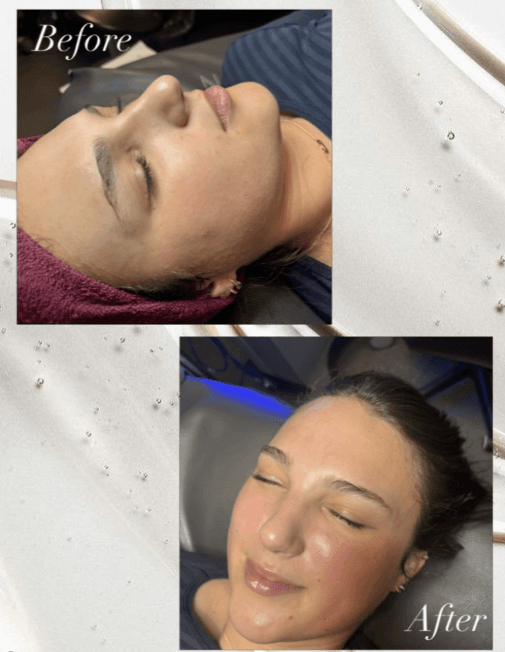
If your skin looks dull and feels tight by January, a hydrating facial can help it look brighter and feel more comfortable. For skin that's congested from heavier winter creams, an express or acne clearing facial can help it look clearer. An LED add-on is a gentle, no-downtime option many clients enjoy in the darker months.
Inversions eventually lift, and so does the gray. Until then, keep it simple: cleanse gently at night, protect in the morning, humidify your bedroom, and check the air before you head out.
Key takeaways
- Idaho DEQ says winter inversions trap pollutants, and PM2.5 has exceeded federal standards during these events.
- Research links particulate matter to skin barrier disruption and oxidative stress, though much of it is lab-based.
- Cleanse gently every night and moisturize damp skin.
- An antioxidant serum, moisturizer and sunscreen make a sensible morning routine.
- Check DEQ or AirNow for air quality, and follow health guidance on bad-air days.
When to see a dermatologist: See a dermatologist if your skin develops a persistent rash, intense itching, cracking or an eczema flare during winter, or if redness and irritation don't calm down with gentle care. For breathing symptoms on poor air quality days, contact your doctor.
Not sure what your skin needs?
Take our 60-second skin quiz for a personalized treatment match, or book a visit at our Garden City studio.
Questions
Does inversion pollution damage skin?+
Research links particulate matter to skin barrier disruption, oxidative stress and signs of aging, but much of the evidence comes from lab studies and population associations. Supporting your barrier is a sensible, low-risk step.
Do I need sunscreen on inversion days?+
It's a good habit. UV can still come through thin clouds, and if you leave the valley for the mountains, snow reflects a lot of UV.
Should I double cleanse during inversion season?+
If you wear sunscreen or makeup, a gentle balm followed by a mild cleanser works well. Keep it gentle so you don't strip your skin.
Where can I check Treasure Valley air quality?+
Idaho DEQ posts daily forecasts and advisories, and AirNow.gov shows the current Air Quality Index.
Sources
- National Weather Service Boise: Climate of Boise
- Idaho Department of Environmental Quality: Air Quality Priority Areas (Treasure Valley)
- Dijkhoff IM et al. Impact of airborne particulate matter on skin: a systematic review from epidemiology to in vitro studies. Part Fibre Toxicol. 2020
- Cleveland Clinic: Dry Skin (Xeroderma)
- American Academy of Dermatology: Dermatologists' top tips for relieving dry skin
- World Health Organization: Ultraviolet radiation fact sheet
- World Health Organization: Ultraviolet radiation and health (UV FAQ)
- U.S. EPA: A Brief Guide to Mold, Moisture and Your Home
- Idaho Department of Environmental Quality: Regional Air Quality Plans and Reports
- AirNow.gov: Air Quality Index
Educational content from a licensed esthetician, not medical advice.