Dry & Sensitive Skin · November 18, 2026 · 6 min read
7 Ways to Fix Dry, Flaky Skin in a Boise Winter
If your skin starts feeling tight the minute the furnace kicks on, you're not imagining it. The National Weather Service describes Boise and the Treasure Valley as semi-arid, with just over eleven inches of rain and melted snow a year. Add cold air outside and forced-air heat inside, and winter becomes the season your skin struggles most to hold on to water.
The Cleveland Clinic lists low-humidity, desert-like climates and cold, windy weather among the main causes of dry skin, and notes it's often worse in winter. The good news is that most winter dryness responds well to small, consistent changes. Here are seven that make the biggest difference, roughly in the order we'd tackle them.
1. Turn your shower down and shorten it
A long, hot shower feels amazing on a 20-degree morning, but hot water strips the oils that keep your skin barrier sealed. The American Academy of Dermatology (AAD) recommends keeping showers and baths to five to ten minutes and using warm water instead of hot. Closing the bathroom door helps keep steam in the room, which is a small win in a dry house.
When you're done, pat your skin with a towel instead of rubbing. Rubbing scrapes away the outermost layer of cells that are already struggling, and it's often where the itch after a shower starts.
2. Moisturize within a few minutes of drying off
The best time to moisturize is while your skin is still slightly damp. Both the AAD and the Cleveland Clinic recommend applying moisturizer right after bathing, because you're sealing in the water your skin just absorbed. Keep your body cream on the bathroom counter so it's impossible to skip.
Moisturize again whenever your skin feels dry during the day, and after washing your hands. In winter that may mean a hand cream in your car, at your desk and by the kitchen sink.
3. Trade lotion for a cream or ointment
Lotions are mostly water and work fine in humid months. In a Boise winter, most people do better with something thicker. The AAD notes that creams and ointments are more effective than lotions at easing dry skin. Look for ingredients that either draw in water or seal it in:
- Glycerin or hyaluronic acid, which attract water to the skin
- Petrolatum, mineral oil, shea butter or dimethicone, which help lock moisture in
- Fragrance-free formulas (the AAD points out that unscented products can still contain masking fragrance)
4. Use a gentler cleanser, and less of it
If your face squeaks after you wash it, your cleanser is too strong for winter. Switch to a mild, fragrance-free, non-soap cleanser, which the Cleveland Clinic recommends for dry skin. On your body, the AAD suggests using cleanser only where you need it, such as underarms and groin, rather than lathering up from head to toe.
This is also a good time to look at your actives. Strong exfoliating acids and retinoids can be harder to tolerate when the air is dry. You don't necessarily have to give them up, but many people do better using them a few nights a week instead of every night.
5. Add moisture back to the air you sleep in
You spend roughly a third of your day in your bedroom, so that's the room to target. The AAD suggests running a humidifier in the bedroom while you sleep. The EPA recommends keeping indoor humidity below 60 percent, ideally between 30 and 50 percent, so you're adding moisture without inviting mold. An inexpensive hygrometer from a hardware store tells you where you're at.
Clean the humidifier regularly according to its instructions. A dirty reservoir can grow mold, which is the last thing you want blowing into your bedroom.
6. Protect your hands and lips before they crack
Hands and lips usually give out first. The AAD recommends wearing gloves for dishes, gardening and cold, dry weather, and using lip balm or petroleum jelly on your lips. A pair of gloves by the door and a balm in every coat pocket is honestly one of the most effective winter skin routines there is.
If your lips are already chapped, resist licking them. Saliva evaporates quickly and leaves lips drier than before. We cover lips, flaky noses and brows in more detail in our guide to flaking around the nose, brows and lips.
7. Keep wearing sunscreen, and get gentle professional help
Winter sun in Boise is often bright, and if you head up to the mountains to ski, fresh snow reflects a lot of UV back at you. The AAD includes sunscreen in its dry-skin tips, recommending a broad-spectrum, water-resistant SPF 30 or higher. A moisturizing sunscreen can double as your morning cream.
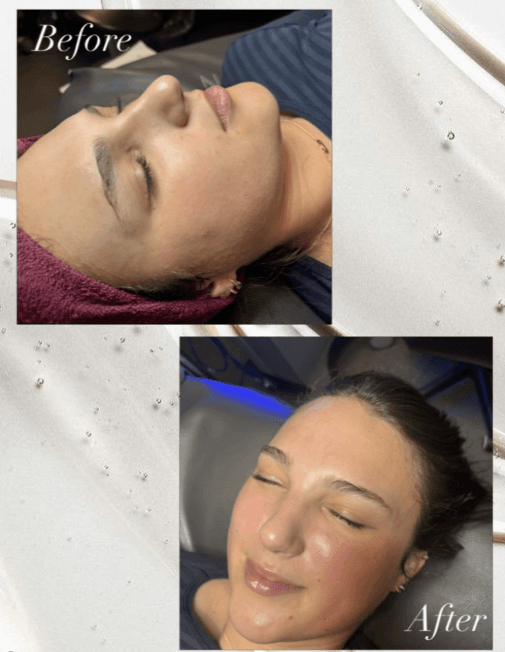
If you want a reset, a hydrating facial can help soften flaky patches and leave skin feeling more comfortable, and an LED add-on is a gentle, no-downtime extra. We'd hold off on dermaplaning or a peel if your skin is cracked, raw or stinging; it's better to calm the barrier first and exfoliate once it feels normal again.
Putting it together
None of these steps is complicated, and you don't need to do all seven on day one. Start with shorter, cooler showers and a thicker cream applied to damp skin. Add a bedroom humidifier next. Most people notice their skin feeling less tight within a week or two of consistent habits. Winter in the Treasure Valley is dry, but your skin can absolutely be comfortable in it.
One last tip: pay attention to what's touching your skin all day. The AAD recommends loose, soft cotton clothing and suggests avoiding wool or polyester directly against dry skin, with a cotton or silk layer underneath if you love your sweaters. Itchy shins and forearms in January are often as much about fabric as they are about the weather.
Key takeaways
- Keep showers to 5 to 10 minutes in warm, not hot, water.
- Moisturize damp skin right after bathing with a cream or ointment.
- Aim for 30 to 50 percent indoor humidity in your bedroom.
- Gloves and lip balm prevent cracking before it starts.
- Calm irritated skin before booking any exfoliating treatment.
When to see a dermatologist: See a dermatologist if dry skin doesn't improve with these changes, keeps coming back, itches so much it affects your sleep, cracks and bleeds, or shows signs of infection such as warmth, swelling or pain. The AAD notes that persistent dry skin can be linked to conditions such as eczema or psoriasis, which need a medical diagnosis.
Not sure what your skin needs?
Take our 60-second skin quiz for a personalized treatment match, or book a visit at our Garden City studio.
Questions
Why is my skin so much drier in Boise in winter?+
Boise is semi-arid to begin with, and winter adds cold outdoor air and indoor heating. Low humidity lets water evaporate from your skin faster, which is why it feels tight and flaky.
Is a hydrating facial worth it for winter dryness?+
It can help skin look and feel more comfortable, especially if you're also improving your daily habits. Think of it as a boost on top of a good home routine, not a replacement for one.
Should I exfoliate flaky skin?+
Gently, and not when skin is raw or cracked. Moisturize first for a few days. Once skin is calm, light exfoliation can lift lingering flakes.
What humidity should my house be in winter?+
The EPA recommends keeping indoor humidity below 60 percent, ideally between 30 and 50 percent. A cheap hygrometer will tell you where you stand.
Sources
- National Weather Service Boise: Climate of Boise
- Cleveland Clinic: Dry Skin (Xeroderma)
- American Academy of Dermatology: Dermatologists' top tips for relieving dry skin
- U.S. EPA: A Brief Guide to Mold, Moisture and Your Home
- American Academy of Dermatology: 7 dermatologists' tips for healing dry, chapped lips
Educational content from a licensed esthetician, not medical advice.